Vitamin C joined to a fatty acid so it dissolves in fat. E304 (Ascorbyl palmitate) is doubtful. On German labels: Ascorbylpalmitat.
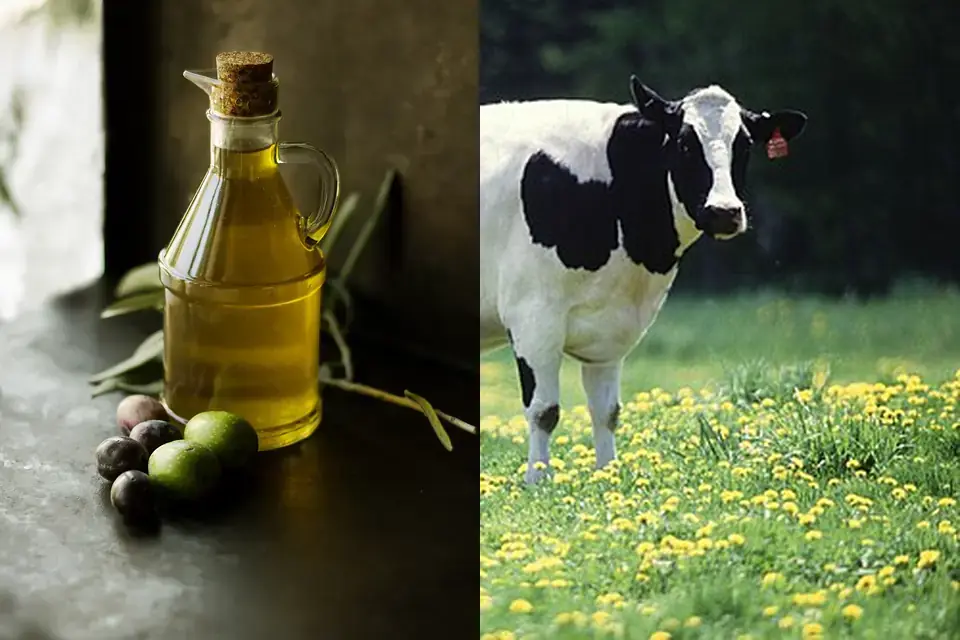
Plant oil or animal fat: the label does not say which
Why it is doubtful
The fatty acid can come from plants or from animal fat, and the label never says which.
Halal or not depends on what it is made from
E304 is Mushbooh: Halal when it comes from plants or a Halal source, not when it comes from pork.
Made from
Verdict
Why
Plant oils
✅Halal
No animal involved
Fat from a Halal-slaughtered animal
✅Halal
Lawful animal, slaughtered correctly
Fat from an animal not slaughtered the Islamic way
❌Haram
Not slaughtered correctly
Pork fat
❌Haram
Pork
Halal-certified product
✅Halal
A certifier checked the source
Source not stated on the label
⚠️Mushbooh
European labels do not have to say which
Scholarly view
Schools of law
Hanafi · Maliki · Shafi'i · HanbaliA fatty acid from plant oil, from synthesis, or from an animal slaughtered the Islamic way (zabiha) is Halal in every school. From pig fat, or from an animal not slaughtered that way, it is not. The schools differ on one point only: where a forbidden fat has been chemically changed into a new substance (istihala), Hanafi and Maliki accept it, while Shafi'i and Hanbali do not. E479b starts from soya oil, but the mono- and diglycerides it is reacted with carry the same question as E471. The tartaric acid in E483 follows the tartrate ruling: made chemically or from unfermented grapes it is Halal by agreement; from wine sediment, Hanafi and Maliki accept it as a changed substance, while Shafi'i and Hanbali are more cautious. If the label does not say where the fatty acid came from, all four advise caution.
Depends on source
Certification bodies
Dept. of Islamic Development Malaysia / Halal Food Authority, UKNeither body publishes a ruling on these E-codes; both certify whole products. The Halal Food Authority assesses each additive by its source (animal, plant or synthetic), its processing aids and any alcohol, so these are cleared only when the fatty acid comes from plants or a Halal source and, for E483, the tartaric acid is not from wine.JAKIM — Halal Malaysia Portal ↗HFA FAQ ↗
SANHA (E304)Lists ascorbyl palmitate as Halal, made from a synthetic chemical.SANHA — E304 ↗
Permissible
Fatwa councils, scholars and other sources
Darul Uloom Trinidad & TobagoLists E470 (the sodium, potassium and calcium salts), E470b, E477, E479b and E483 among E-numbers that are not necessarily haram but may come from animal or plant sources, so they must be checked.Darul Uloom Trinidad & Tobago — E-numbers ↗
Only views with a published source are listed. Our app shows E304 as Mushbooh unless the label or the maker settles the source.
Where you meet it
Oils, infant formula, savoury snacks.
What to do in the shop
Look for a product that names the source, says plant-based or vegan, or carries a Halal certificate. If nothing on the packet settles it, the manufacturer can tell you, and their answer is the only thing that turns E304 from a question into an answer.
A status here describes the additive in general, and a specific product can be different. The same number can be made from plant or animal material depending on the manufacturer, and the label does not say which.
Questions people ask
Is E304 Halal?
E304 (Ascorbyl palmitate) is doubtful. The fatty acid can come from plants or from animal fat, and the label never says which.
How do I know if the E304 in a product is Halal?
Only the manufacturer can tell you which source they used, unless the packet says plant-based, vegan, or carries a Halal certificate.
An additive's status describes the additive in general. What matters is the whole ingredient list on the packet in your hand.
This is information, not a fatwa. These statuses combine published scholarly positions with ingredient analysis, and they can be incomplete or out of date. For anything that matters, confirm with the manufacturer and with a qualified authority.