Sulphites (E220 to E228): Halal or Haram?
Halal
Sulphites preserve colour and hold back fermentation. They all begin as mineral sulphur, and the differences between the numbers come down to which salt the sulphur is paired with. You meet them most often on dried fruit and in wine, but the additive itself contains neither alcohol nor anything animal. Also written sulfites.
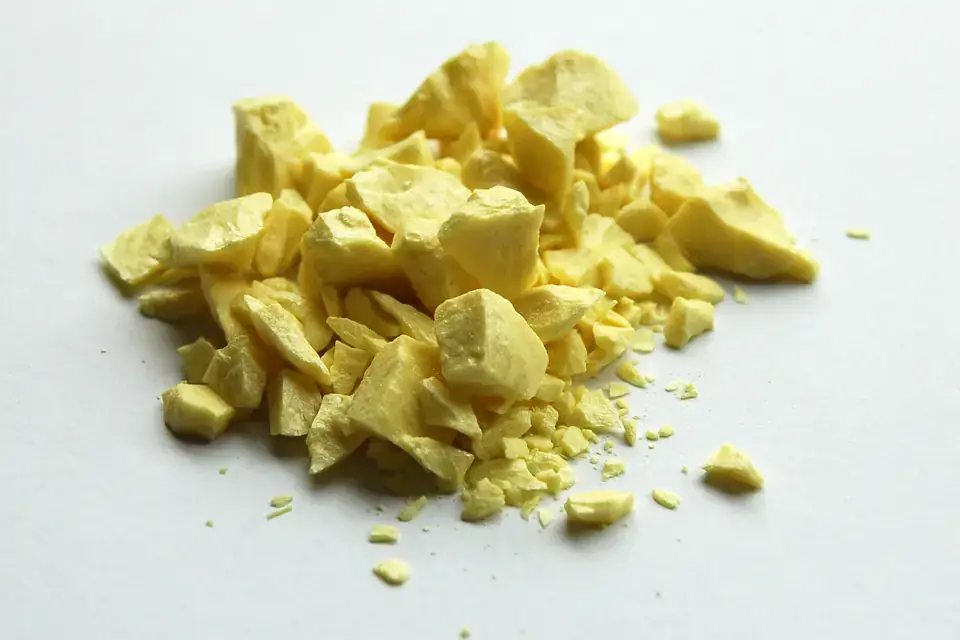
E220 Sulphur dioxide
A preservative gas that stops browning and fermentation.
Why it is Halal. This is the gas form, the one declared on dried fruit and used to stop juice browning before bottling.
Where you meet it. Dried fruit, fruit juices, pickles, potato products.
E221 Sodium sulphite
A sulphite salt used to preserve colour and freshness.
Why it is Halal. Made from mineral sulphur compounds and a sodium salt.
Where you meet it. Dried fruit, processed potato, fruit juice.
E222 Sodium hydrogen sulphite
A sulphite preservative in liquid form.
Why it is Halal. Mineral in origin, like the rest of the sulphite family.
Where you meet it. Fruit preparations, juices, wine-style drinks.
E223 Sodium metabisulphite
The powdered sulphite used widely in food processing.
Why it is Halal. Produced from mineral sulphur dioxide and a sodium salt.
Where you meet it. Dried fruit, shellfish, pickles, baking.
E224 Potassium metabisulphite
The potassium counterpart, common in drinks production.
Why it is Halal. Mineral sulphur chemistry again, with potassium instead of sodium.
Where you meet it. Juices, dried fruit, wine-style drinks.
E226 Calcium sulphite
A sulphite that also firms plant tissue.
Why it is Halal. Mineral sulphur with mineral calcium.
Where you meet it. Tinned vegetables, fruit preparations.
E227 Calcium hydrogen sulphite
A sulphite used in brewing and vegetable processing.
Why it is Halal. Mineral in origin.
Where you meet it. Tinned vegetables, beer-style drinks.
E228 Potassium hydrogen sulphite
The last of the sulphite series.
Why it is Halal. Same mineral chemistry as the rest of the family.
Where you meet it. Fruit products, drinks.
What to do in the shop
Nothing special to do for E220 itself. Read the rest of the list: a product is only as clear as its least clear ingredient.
Questions people ask
Is E220 Halal?
E220 (Sulphur dioxide): Halal. This is the gas form, the one declared on dried fruit and used to stop juice browning before bottling.
Is E221 Halal?
E221 (Sodium sulphite): Halal. Made from mineral sulphur compounds and a sodium salt.
Is E222 Halal?
E222 (Sodium hydrogen sulphite): Halal. Mineral in origin, like the rest of the sulphite family.
Is E223 Halal?
E223 (Sodium metabisulphite): Halal. Produced from mineral sulphur dioxide and a sodium salt.
Related additives
Check a product, not just a number
An additive's status describes the additive in general. What matters is the whole ingredient list on the packet in your hand.